You have to stand guard over the development and maintenance of democracy, social justice and the equality of mankind in your own native soil. [Mohammed Ali Jinnah]
Showing posts with label Swat. Show all posts

Sunday, May 17, 2009

Swat – a report from the frontline ... Farhat Taj

Recently an AIRRA (Aryana Institute for Regional Research and Advocacy – an Islamabad-based research organisation) investigation team went to some parts of Swat that had been under army attacks. The team observed whether the attacks were targeted at the Taliban and their installations. It observed two villages -- Ladikas and Watkai in Mingora -- and Khwazakhela, a tehsil in Swat. The team with its access to the people of the area could manage to take Besham route from Islamabad to reach Mingora via Khwazakhela. Though continuous curfew and alternate threats from the military posts and the Taliban posts badly hampered the journey of the team but somehow some of the members could manage to reach Mingora via Khwazakhela and Charbagh with the exodus of the people from different parts of Swat valley. The team was able to access and interview several dozens of those families who were still stuck up in the valley.

The team observed that the security forces have successfully destroyed the installations of the Taliban and have disrupted their chain of command in that area. They have killed many Taliban there with very little collateral damage, albeit with the destruction of civilian infrastructure. The best example is the Taliban headquarter in Khwazakhela. The headquarters was located on a mountain. It housed the Taliban operational command led by commander Yamin, the intelligence department led by commander Rashid and the department of logistics and supplies. The aerial bombardment of the Pakistan army reduced all that to rubble. The entire side of the mountain housing the headquarters has been exploded and razed.

The Taliban terrorists had established the headquarters with great efforts. They had cleansed a huge portion of the forest on the mountain to make free space for the building. They recruited the youth on a large scale, strengthened their command and control structure, established their hierarchical structure, planted mines on the main roads, dug bunkers and occupied the strategic passes in only two and a half months. And they did all this after the peace deal agreed with the NWFP government in February of this year.

The team interacted with the people in the area. Most of those killed were confirmed Taliban. There had been almost no serious collateral damage. Nearby buildings collapsed due to the force of explosions. Some people got injuries when hit by the collapsing debris.

Moreover, the army has cordoned off several narrow alleys of Mingora to prevent the Taliban from escaping. The military has cordoned off Swat from the northeast (the Shangla side), the southeast (the Buner side) and the southwest (the Dir side). In Mingora city itself, the Taliban are reported to be lying dead in the streets and local people confirm that some of them are well-known Taliban leaders.

There are still stranded people in Swat. The people are facing enormous difficulties due to power failure and water reservoirs in their homes which have dried up. Food commodities have become scarce and fuel stations have more or less stopped functioning. Soldiers of the Pakistan army and the FC are sharing their limited food rations with the stranded people. This goodwill gesture has earned respect of the stranded people for the security forces.

It is suggested to the army to issue the photos or video clips of the killed Taliban to the media and of the destroyed Taliban installations. Local people and the IDPs often know the Taliban and location of their installations. They would confirm that the dead were indeed the Taliban and the installations shown as destroyed indeed belonged to the Taliban. This is important because it will ensure transparency and reassure people of the success being achieved in the war.

It is highly commendable that the security forces are conducting targeted operations that have considerably damaged the Taliban in Swat. I would once again request the army high command to destroy the Taliban networks, installations, headquarters everywhere in Pakistan, including FATA and south Punjab. Taliban leaders in each and every city or town of Pakistan have to be neutralised. There is a strong connection between the Taliban in Waziristan, Orakzai, Swat, South Punjab, Khost and Kunar in terms of supply of manpower, weapons and chain of command. This connection is the Al Qaeda-linked Jalaluddin Haqqani and his terror secretariat in North Waziristan. This connection has to be broken, which means that Haqqani's 'secretariat' must be destroyed. Other than the military front, the war against militancy also needs to be fought on the ideological battleground -- Talibanisation needs to be denied ideological space in the country's security and state apparatus and this can be done by targeting elements in state structures and institutions deemed as being sympathetic to the militants.

The army must carry the war against the Taliban to its logical end. The army owes it to the Pakhtun and by extension to Pakistan, because the Pakhtun are citizens of the country and hence deserve the same protection by the state as accorded to those in the other provinces. The Pakhtun have always taken pride in giving their best sons to the army. It is now the turn of the army to reciprocate in such a manner that truly honours the Pakhtun martyrs of the army. This means complete elimination of the Taliban so that the Pakhtun live their lives free of the jihadi fear and intimidation. If done successfully, this will bind the Pakhtun even more closely with the state and the army. In that context, the army must convert this war into an opportunity that will substantially contribute towards making Pakistan a successfully functioning multi-ethnic state.

While the army is rising itself to the occasion, the performance of the politicians is dismal. The soldiers are giving their blood to save us from the Taliban. They are sharing their limited food ration with the stranded people. The army has given a share of their salary to support the relief work for the IDPs. Where are political leaders? What is President Zardari doing abroad? He should be visiting the IDPs rather than foreign lands. What is Asfandyar Wali doing in London? Why is Afrasiab Khattak in Dubai? The IDPs constantly complain that the ministers, MPAs and MNAs only come when the media is there and leave soon afterwards, without tending to their (the IDPs) problems.

All MNAs and MPAs, especially those elected by the people of Swat, Dir and Buner, should stay with the IDPs of their respective constituencies as long as possible because these are after all the people who voted them into public office.

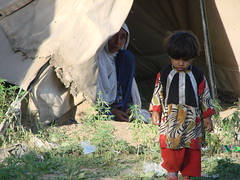
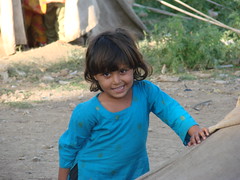
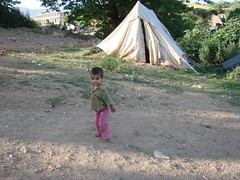
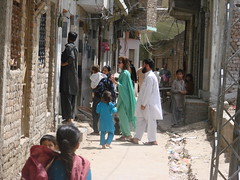
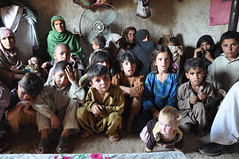
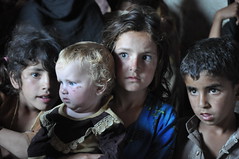
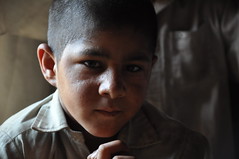
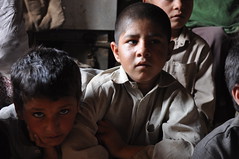
Internally Displaced People in Islmabad .... Fauzia Minallah

Following is an email by Fauzia Minallah (funkor.childart@gmail.com) an active civil worker from Islamabad, sent on a volunteer group, making it public, so that it can help create awareness on the situation of IDP's who have migrated to Islamabad.

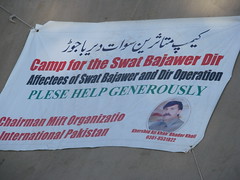
According to some news reports there are nearly 50,000 IDPs in Islamabad. Civil Society Islamabad, visited 4 locations identified by out of these only one was an informal camp with approximately 40 tents near the Katchi Abadi in G 7/1. The IDPs are not registered in Islamabad and unless they are registered it is difficult to identitify deserving and genuine IDPs.

Amna Paracha and Ghazala Minallah met Sattar Edhi, according to him there should be a camp in Islamabad to identify genuine IDPs only then one can help them. The three other locations we visited, we found the IDPs living with their relatives. Several families cramped in one room.

Their problem is the sudden increase in rents by the locals. They are vulnerable to exploitation by individuals and dodgy NGOs. Despite all these problems atleast there is a roof over their heads. They need to be registered during summer break these families can spend the hot summer months in schools

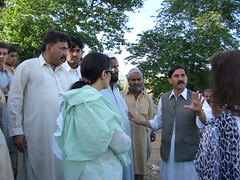
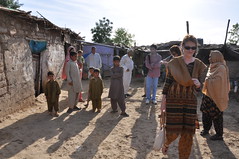
IDP camp in G 7/1

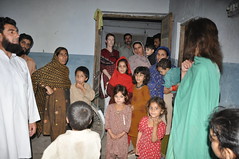
Amna Paracha and Ghazala Minallah in IDP camp in G 7/2 IDPs camp in G 7/2 Islamabad

IDP camp in G 7/2 IDP camp in G 7/2

IDP camp in G 7/2 PPP workers are running G 7/1 camp

All rights reserved

IDP camp in G 7/2 IDP camp in G 7/2

All rights reserved

All rights reserved

IDP camp in G 7/2 IDP camp in G 7/2

IDP camp in G 7/2 IDP camp in G 7/2

All rights reserved

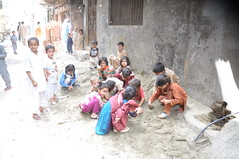
Hazara Colony, Near Nala Leh.Pindi

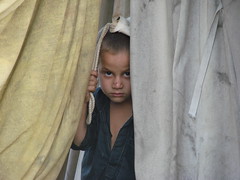
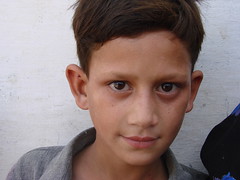
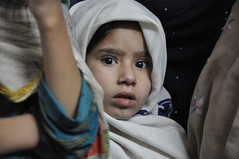
Hazara Colony, Near Nala Leh.Pindi Swati child in Hazara Colony, Pindi

All rights reserved

Hazara Colony, Near Nala Leh.PindiHazara Colony, Nala Leh Rawalpindi

Swati child in Hazara Colony, Pindi Swati child in Hazara Colony, Pindi

IDP in Golra

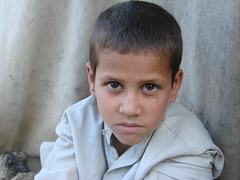
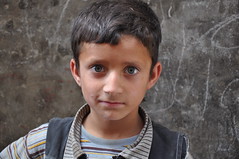
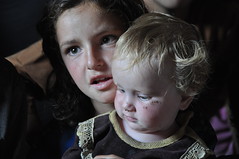
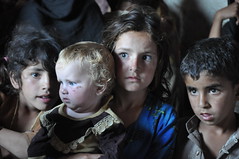
Sara Mehmood, Ali Kazmi and Ghazala Minallah in Golra, Islamabad Swati children in Golra, Islamabad

All rights reserved

Swati children in Golra, Islamabad Swati IDPs in Golra, Islamabad


Swati children in Golra, Islamabad Swati children in Golra, Islamabad

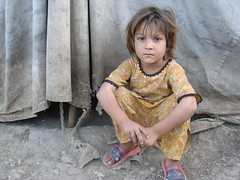
Swati child suffering from cancer, in Golra, Islamabad Swati child in Golra, Islamabad

All rights reserved

All rights reserved

Swati child Manan suffering from cancer, in Golra, Islamabad

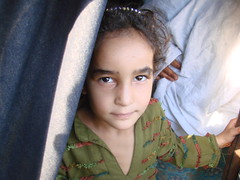
Swati children in Golra, Islamabad Swati child in Golra, Islamabad

Swati children in Golra, Islamabad

Tuesday, May 12, 2009

Pakistan faces biggest human flood since 1947

complete story: http://www.npr.org/templates/story/story.php?storyId=103987025

Thousands of civilians fled Pakistan's Swat Valley on Sunday after authorities briefly lifted a curfew. Pakistan's army said its war planes killed at least 180 Taliban militants within a 24-hour period in its all-out offensive in northwestern Swat Valley.

The army's casualty figures cannot be independently verified, but the U.N. warns that the fighting is producing one of the world's largest displacements of people. As they gather in makeshift camps, refugees' attitudes conflict about their plight and just who is responsible for the war that has driven them from their homes.

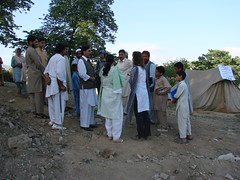
Across the district of Mardan, row upon neat row of tents is going up as the messy business of housing refugees from the conflict next door in Swat Valley picks up pace.

Swat Valley has become the epicenter of the power struggle between the militants and Pakistan forces. International aid agencies say 200,000 people have already escaped the widening conflict there. Another 300,000 are either on the move or trapped by the fighting.

Hundreds seeking help have overwhelmed the sprawling, century-old tuberculosis hospital that's turned into a receiving center in Mardan city. The new arrivals jostle each other in long lines. A full-throated official, or nazim, steps in as the heat bears down and patience wears thin. "It is our duty as Muslims to support you," he said to applause.

"Within two or three weeks you'll be back home and, God willing, those terrorists in the name of Taliban will be destroyed. Maximum three weeks."

read more ...

Thursday, April 9, 2009

Distt. Buner locals form more lashkars to fight militants

Buner Locals Form militia to fight Talibanpicutre source: related Dawn.com news story

Second time in 2 years, the local tribesmen have taken up arms against the Pakistani Taliban to resist their forced entry into the Distt. Buner.

Last year, close to 400 local residents were killed, when they barricaded the mountain pass and river crossing at Khogan, to the Disst.Buner from the Swat valley, then a strong hold of Maulana Fazlullah and Mangal Bagh's militia's.

The locals formed up militia's to keep the Taliban out, and not provide the Army an excuse to come in the scenic Buner. They are of the view that Army's presence gives TTP an excuse to barge into the area, and vice versa. The local residents vowed not to let their hometowns become a battle field between the two.

Local Police is the only law enforcement agency that is trusted by the residents of Buner, as is evident from yesterday's clashes in which two policemen and two locals were killed, jointly fighting off the TTP militia at Koghan.

This time around, Dawn Newspaper reports that seven militia's of 100 each have been formed by the locals, administered by the influential elders, to hold key strategic positions. Last year they were able to thwart TTP advances and managed to keep the area military free, but only after a toll of 100's of deaths.

Current events, have already kicked off as a bloody standoff between the locals and TTP from Swat. This time around Army has increased its presence in the area already, and seems less prepared to let the civilians fight off the Taliban all by themselves.

For Dawn News Report, please click here

Sunday, April 5, 2009

Protest Against terrorism in Islamabad,

Human Rights Activists, Journalists, Students, Youth Organisations and Civil Society activists held a protest against the Terrorism near press club, Islamabad, yesterday. The protestors demanded a swift action against those responsible for terrorism, especially the recent incident of public flogging in Swat.

an overwhelming majority of the protestors were women.

Saturday, April 4, 2009

CJ Chaudhry demands report on Swat woman’s flogging

An eight-member bench headed by Chief Justice Iftikhar Chaudhry was earlier constituted to investigate the incident. - AFP

ISLAMABAD: The Chief Justice of Pakistan ordered governmentofficials on Monday to submit a detailed report within 15 days over thepublic flogging of a veiled woman, an incident that incensed the nation.

complete story: DAWN report

Sunday, February 22, 2009

Swat deal and western pressure

Excerpts from a letter to the editor:

The West in particular and some people within Pakistan are opposing the pact with the TSNM, saying we should not stop fighting the militants. First, Soofi Muhammad cannot be seen as a militant, given his peaceful protest camp in Timergara and, now, the very impressive effort to promote peace in Swat. After nearly a year and a half of turmoil, the poor people of Swat have breathed easy and are even celebrating the occasion -- we must not betray them again.

Second, Jonathan Steele is a veteran British journalist who has been covering Afghanistan since the time of the Soviet invasion. There are many important arguments given in his article, based on long experience of the country.

For instance, the self-evident title becomes more lucid by the following paragraph: “Nato faces tougher challenges than the Russians (did). Twenty years ago, Taliban did not exist, suicide bombing was not in vogue, and the Afghan army and police were more effective.

....

..., it is up to us to save Pakistan, above all, and, after that, help the West to whatever extent we can. One has lost track of the number of senior western officials who have been saying aloud that there is no military solution to the Taliban problem and are themselves advocating peace talks with the Islamist militia.

Why should we be pressured to keep fighting an unwinable and endless war and get fatally injured? What is sauce for the gander should be sauce for the goose as well.

In his letter, Mr Ahmed has noted that the government did a U-turn after releasing Dr A.Q. Khan no sooner than the West expressed its annoyance. One only hopes that Islamabad doesn’t reverse its decision about the Swat agreement after it has had time to deal with the lawyers’ long march and sit-in the next month.

If the people’s trust is lost once more, the consequences will be disastrous.

ABDULLAH
Karachi
DAWN.COM | Letters to the Editor | Swat deal and western pressure
Blogged with the Flock Browser

Swat accord is not surrender

By Kunwar Idris . Sunday, 22 Feb, 2009
Supporters of Maulana Soofi Mohammad peace march on the street of in Mingora, outskirts of Swat valley.— Reuters

A day after President Zardari conceded in an interview with an American television channel that the Taliban had established their presence across large swathes of Pakistan, the government of the NWFP, with his approval, recognised the presence of the militia in Swat - one which could not be eradicated even by military action.

Only time can tell whether this recognition will work to advance or check the aim of the Taliban which, in Zardari’s words, is ‘to take over the state of Pakistan and our way of life’. The instant merit of the agreement between the provincial government and Maulana Sufi Mohammad, however, lies in bringing to an end the sufferings to which the people of that once idyllic valley have long been subjected.

The jubilant crowds on the streets of Swat were celebrating not the advent of Sharia law but the return of normality — let there be no mistake about it. The ovation given to Sufi Mohammad was not because of recognition of him as a harbinger of a new order but as a messenger of peace.

Even if he is unable to persuade his Taliban son-in-law Fazlullah to lay down his arms and abide by the agreement, Swat’s worst nightmare, it seems, is over. If the political administration now acts sensibly and promptly, Fazlullah’s marauding men will no longer be able to raid music shops, harass women or burn down schools.

The reaction of Pakistan’s allies — the US and Nato — quite predictably has been sceptical. Both would have preferred Pakistan to press on with its military campaign. They suspect that the ceasefire would only provide a respite, giving the terrorists time to regroup and mount their assault again.

The allies, however, have conveniently overlooked the ground reality that the army operation was alienating the population without exterminating the fanatical fighters.

Thus even if the agreement fails to take hold, the ceasefire provides an opportunity to the government to muster popular support more than it does to the terrorists to refurbish their armoury. The loss of life and earnings that people of all vocations have undergone seems to suggest that they would rather put up with the present system howsoever corrupt or unjust than suffer all the more while waiting for an elusive Islamic order.

In any case the agreement between Maulana Sufi Mohammad and the NWFP government stipulates no more than a judicial system based on the Sharia laws to be introduced in the former princely states of Swat, Dir, Chitral, the protected area of Malakand and Hazara Kohistan.

The executive authority and all other regulatory and developmental functions will continue to vest in the provincial and federal governments under the same laws as are applicable to the rest of the country.

The judicial system envisaged in the agreement is hardly any different from what was in vogue in the former princely states before they were made districts. It was informal, inexpensive and expeditious even if harsh and not always just. Such was the experience of this writer as resident political agent and adviser of Chitral state as also of his colleagues in Dir and Swat.

The formal introduction of Sharia courts now that the states have become districts must not be viewed as Talibanisation of their society or institutions. For all purposes other than the trial of criminal cases and adjudication of civil disputes they will continue to administer justice as is done in other districts of the country.

It needs to be clearly understood that the three states and other parts of Malakand and Hazara divisions are not tribal societies nor wild territories in the sense that next-door Bajaur and Mohmand or further Khyber, Kurram, Orakzai and North and South Waziristan are.

It was wrong to have grouped them as Pata, i.e. provincially administered tribal areas, for they are not tribal as are the federally administered agencies collectively called Fata. Between Pata and Fata there is little affinity or communication. Even the language and social norms differ. Swat has cultural and lingual links with settled Mardan but none with the Mohmands, for instance.

Likewise, Sufi Mohammad’s Tehrik Nifaz-i-Shariat Muhammadi predates the Taliban phenomenon and had no connection with it — until recently. It was the agony caused by the expense, delay and corruption inherent in the operation of the unfamiliar and complex laws of Pakistan that persuaded him to launch a mass campaign for the enforcement of Sharia law in Dir much before 9/11. As the campaign dragged on, Sufi Mohammad’s son-in-law Fazlullah from his base in Swat established contacts with the Taliban and the movement took a violent turn.

Despite this connection which surely brought the TNSM arms and money, it remains essentially an independent movement confined to Dir and Swat. The occupation of Pakistan and the destruction of America do not appear to be its goal.

It would not have gathered the momentum it has if our local councils instead of indulging in politics had attended to the needs of the common people and had spared them the torture of prolonged litigations. The provisions of the local government law relating to the care of the poor and settlement of disputes at the village level had all along remained a dead letter.

Pakistan stands much to gain and its allies in the ‘war on terror’ have little to lose if the Sharia courts bring tranquillity and tourists back to the Swat valley and the mountains beyond that are among the highest in the world. Sharia law is not new to the area but violence is. As political agent in the 1960s, this writer presided over both Chitral’s Sharia system and its secular judicial council only to wonder now whether the people living under Pakistan’s elaborate judicial system could ever be as law-abiding, tolerant of dissent and content in poverty as were the Chitralis then. Swatis were not much different.

Given a just and non-intrusive but firm administration they can be the same again. Advice from Ijlal Hyder Zaidi who had long served in the region and was later Benazir Bhutto’s adviser should help. Talking to the mullahs and militants undoubtedly has its risk but it is one worth taking for the survival of Pakistan and peace of the region. The liberals and militarists will surely live to fight another day.

DAWN.COM | – NWFP | Swat accord is not surrender

Blogged with the Flock Browser

Saturday, February 21, 2009

Progressive Youth Front (PYF) Karachi Protest Demo on Saturday 21st February

Progressive Youth Front Karachi calls on civil society, activists, and particularly the youth of Pakistan to protest the ongoing injustices in Swat. We believe the recent Nifaz-e-Adl to be an unnecessary capitulation to forces that have held ordinary and civilian Swatis hostage. Much like the brutal and indiscriminate military operation could never solve the crisis of militancy, the Nifaz-e-Adl promises only a temporary reprieve. The decades-long neglect of the human rights of Swatis will not be addressed by this agreement. If it has any popular resonance, it is only because people are frightened, and tired of war and curfew. In that sense, a renewed military offensive promises to play into the hands of the militants. We call on the government to push instead for a ceasefire, backed by the promise of a free and fair referendum on the question of judicial reform. In the meantime, we express our full solidarity with our progressive brothers and sisters in Swat, whose resistance has been doubly suppressed, both by the bombardment of the military and the machinations of the Taliban.

As a youth organization, we want to, in particular, call attention to the devastated state of the schooling system in the district—for which both the military and the Taliban bear responsibility. Any sustainable solution to the problem of militancy in the region has to include a comprehensive plan to restore and improve the provision of education in Swat.

(About PYF: Progressive Youth Front Karachi is a revolutionary youth organization that believes in a secular and truly democratic Pakistan. We reject the inequalities and poverty that ravage our society, and will continue to organize for a more humane, just, and equal Pakistan.)

Protest demo against â€Å“demolishing of educational institutes, Taliban fundamentalism, drone attacks on innocent people of swat, Bajhor, military operation of US imperials and local agents†.

Please come and show your solidarity with innocent people of swat and all area of Pakhtoon kawa.

Programme schedule
Date; - 21 February 2009

Day: - Saturday
Time: - 3:00 p.m.
Venue:- Karachi Press Club (KPC)
Please contact for details
Adanar,
0308-2497022.
Sherbaz,
0333-3280945.

Wednesday, February 18, 2009

Avoiding selective silence....... by Samad Khurram

source:http://dawn.net/wps/wcm/connect/Dawn%20Content%20Library/dawn/news/pakistan/Pakistan-Online-yn

In Swat, the army indulges in another never-ending battle with elusive militants who hold entire cities hostage to their whims. The silent victims of this violence are ordinary residents whose lives have been utterly devastated by the carnage. Sadly, there is no hope for peace until the residents of Swat and the people of Pakistan actively stand up and do their part in combating terrorism.

Speaking out against Islamic militants remains taboo in the minds of Pakistanis for many reasons. People are genuinely afraid of threats or falling victim to terrorism. Numerous editors have claimed to have been threatened by militants or their supporters. Furthermore, many who disagree with the militants in their actions may sympathize with what they stand for – a Shariah-based system of governance. They tend to silence their criticism either in the vain hope that militants will reform themselves, or for fear of being labeled a non-Muslim.


While we are often quick to dismiss conservatives as narrow-minded, this strategy of selective silence stems from the most progressive people of our country. PPP loyalists, who tend to be the most vocal advocates of human rights during other governments, turn a blind eye towards the appointment of honor killers in their cabinet. Those who still let principles guide their conscience and dare to speak up are scorned for sowing the seeds of a military takeover or being right-wing. Constructive intellectual discourse is stifled by an ‘us vs. them’ rhetoric that has become commonplace in our society.


For those who do wish to speak up, alternative media presents a different avenue. People can communicate without having to reveal any personal information using blogs, in chat rooms, or by commenting on popular sites and online videos. The messenger is saved from witch-hunts while the message trickles down. Given time, these drops of dissent can form a reservoir of change. Indeed, those of us who had no experience with or intention of starting a blog or mailing list realized that alternative media was the only tool left to us when the mainstream media vanished from our households in November 2007, when General Musharraf imposed emergency rule.


Eventually, the real resistance to the emergency was built on the internet. Millions signed online petitions and hundreds of thousands extended support as the world watched the blogosphere explode with anti-Musharraf rhetoric. Efforts such as The Emergency Times blog and mailing list, which I helped publish, helped people stay informed about protests as well as emergency-related news developments.


Some in Swat have tried to follow a similar model, but have enjoyed limited success. They were drowned out by the cacophony of voices on the internet or lacked the fundamentals of good blogging. Ironically, it was the mainstream media that helped put alternative media back on the map during the present crisis. An online dairy became a success once BBC Urdu picked up the blog of a brave seventh-grade school girl from Swat who pens her thoughts as well as the sights and sounds from the area, and tailored it for the general audience.


These online efforts have helped advocate for change, but the fact is the Emergency Times and Swat Diary will remain event-centric blogs, popular only among a small band of followers. Real, long-term impact is achieved by those who are willing to reveal their identities along with their message. Moreover, credibility is built by being consistently honest and advocating for the same principles each time.


Professor Adil Najam is one blogger who has spoken critically and impartially on many issues ranging from economics to foreign policy and religion at Pakistaniat.com. Thanks to his careful analyses, this liberal has garnered the trust and goodwill of many conservative Pakistanis across the world, and has even succeeded in changing many of their minds. Comments on Prof. Najam’s website clearly suggest that his readers do not agree with everything he says. Yet when he asked for help in reconstructing a girls’ school in Swat, his readers were quick to donate one-third of the cost in a few days. Many of the pro-judiciary, pro-Musharraf, pro-Nawaz, and pro-PPP cadres, who normally point knives at each other’s throats, banded for a common cause.

The same results could not be achieved by other cyber-intellectuals such as Ahmed Quraishi and Zaid Zaman Hamid. When reports of the crisis brewing in Swat were first revealed by Hamid Mir, Zaid Hamid was quick to dismiss them as fabrications and allege instead that Mir was a covert CIA operative. Neither website today has any mention of the crisis in Swat. And, in my opinion, neither would succeed if they initiated a call for action.


The fact is, alternative media has changed the dynamics of moral responsibilities. If you are a Pakistani who is able to read this message, it is your ethical and national obligation to speak up, present your side of the story, advocate for change, and organize for a better tomorrow. It also means that you are responsible for whatever statements you make as a Pakistani on the internet. Online readership is not geographically bound and one irresponsible statement can unleash a storm of hate. The vitriol generated by Zaid Hamid’s war threats to Indian journalists and citizens is ample proof of the high potential of abuse alternative media has.


The eventual hope of positive change in Pakistan rests with those who choose to make their voice heard by whatever means necessary. Specifically, that hope lies with nonpartisan activists such as Prof. Najam and not with those who exacerbate the ‘us vs. them’ split. Criticism must begin at home and must be applied without restraint to everyone, beloved or hated. That is the only way to change the minds of those on the other side and make the most of the power of free speech.


Samad Khurram is an undergraduate at Harvard University who made headlines by refusing to accept an award from the US ambassador to Pakistan, citing continuing drone attacks in the country. He maintains a popular blog and has participated in the lawyers’ movement to restore the judiciary dismissed by former President Pervez Musharraf.

Wednesday, December 17, 2008

Peshawar by Night (Hakim Hazik)

The winters in Peshawar can be quite chilly. If you consider the frequent power and gas outages, the good citizens of Peshawar had a particularly harsh winter this year. It could have been worse if it was not due to a group of highly public spirited individuals, who were blessed with courage, determination, a sense of purpose, kerosene oil and a box of matches, and set the NATO convoy on fire.

The civil and military authorities were quite taken by this thoughtful gesture and facilitated the venture by sending all the guards on extended leave for Bakra Eid. There was one decrepit guard, who created a bit of a wheeze, but was persuaded to desist from interfering, with the help of a bullet in the head.

Have you ever warmed your self in the gentle glow of a burning humvee? Beats any sun drenched beach I know of. It does cost a fair bit: a hundred thousand dollars of tax payer's money. It is the American tax payer though and therefore this is a great form of renewable energy.

If you go down the Kabul river and up the Swat river, you come to this emerald green Swat Valley. The good citizens of Swat are not happy with any half measures. They have chalked out a comprehensive energy policy. They decided upon the common sense solution of increasing public savings, by first of all excising the government blubber. This was rapidly achieved by burning to ground 200 girls' schools. Millions of rupees of public money were thus saved with one master stroke.

The army, of course is busy wiping out the pockets of militant resistance. The militants on the other hand are busy wiping out the pockets of army's resistance. Both are busy wiping out the civilian resistance. In the process all the Buddhist artefacts that have blighted the landscape for millennia have been completely wiped out. Once the smell of dynamite has subsided, the valley will have been cleansed of all living things and would return to being what it was at the beginning of time. This is called sustainable development.

Punjab adds vibrant colour to the national tapestry. Its dynamic business friendly government is working day and night to help its citizens. Multinational and local companies are setting up bottling plants for drinking water. It is a great way to improve public health and generate employment at the same time. Meanwhile, the tap water containing tadpoles can be used to improve the health of your mother in law. The department of health is working to find a market solution for those who can not afford to buy bottled water. A cholera epidemic is planned in near future.

This is good governance. You can buy good governance at affordable rates. You can buy private education, you can buy private security, and you can buy private health care. You can also buy the police and the judges. You can hire syndicate killers. You can have police encounters at a competitive price.

Would you like a police encounter at a special discount?

(Picture and Text Source: http://justicedeniedpk.com/JDP/post/2008/12/15/Peshawar-By-Night.aspx )